Spyware Detection: Beyond Antivirus Scans
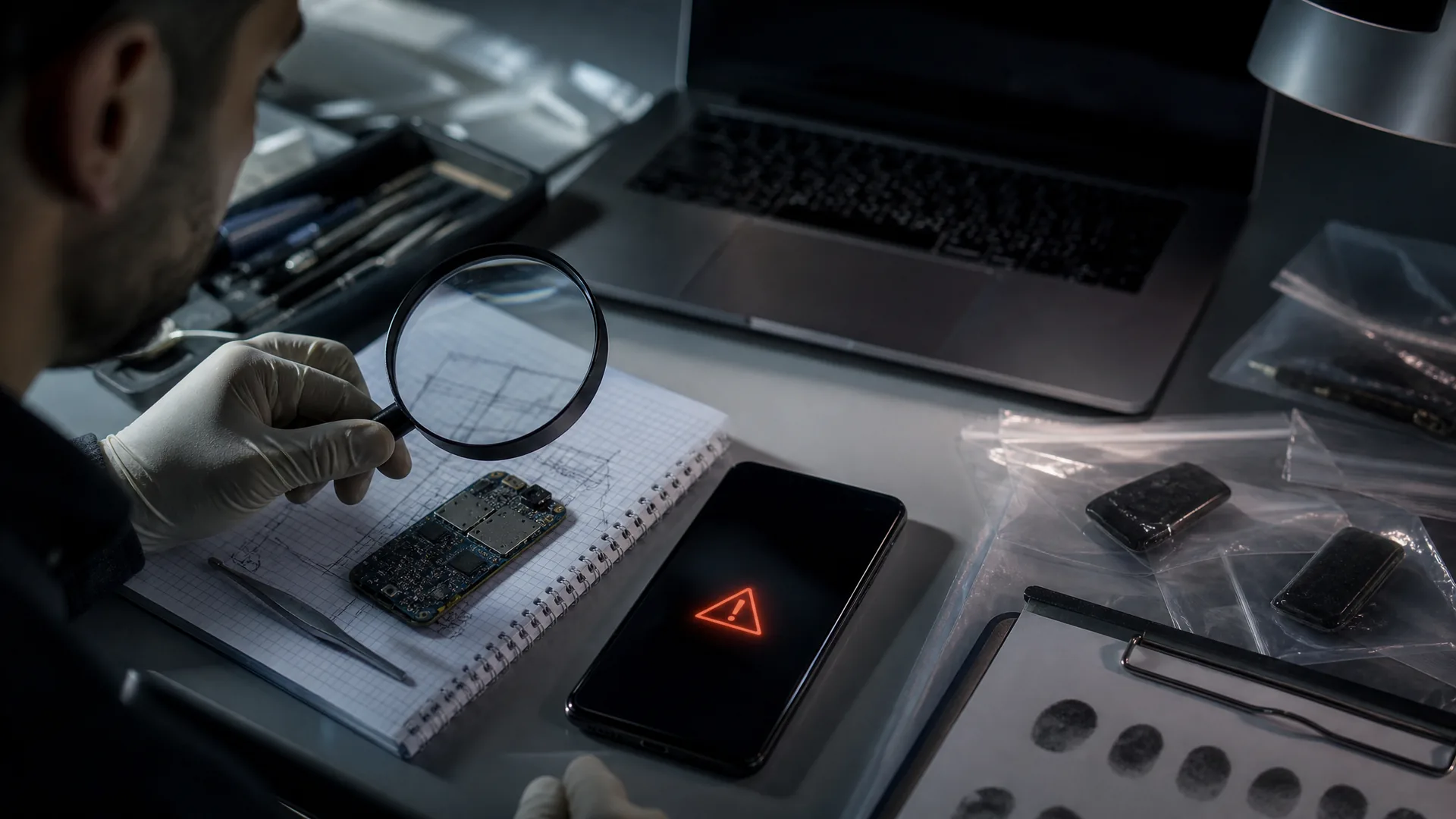
Someone types "spyware" into a search engine after noticing a phone battery draining fast. Or a company notices files leaking before a tender closes. What they usually find is generic antivirus advice: download this app, run a scan, delete the threat. That advice isn't wrong. It's just incomplete.
Spyware cases that reach a licensed investigator rarely stop at a scan-and-delete fix. They involve a spouse who needs proof for a custody hearing. They involve a company that needs to know who planted a tracking tool on the network, and why. This article looks at spyware from that vantage point: personal disputes, corporate espionage, and the forensic work that turns a suspicion into evidence.
What Is Spyware, and Why Most Advice Online Misses the Point
Spyware is software installed on a device to secretly monitor its user. It can log keystrokes, capture screenshots, track GPS location, read messages, or record calls without the device owner's knowledge. Unlike a smash-and-grab virus, spyware is built to stay hidden and keep working for as long as possible.
That is precisely what makes generic advice so limited. Consumer antivirus tools catch known malware signatures at scale. They aren't built around the specific circumstances of a marital dispute or a corporate leak, where the software installed may be a legitimate commercial product used for an illegitimate purpose. Understanding what spyware actually is, and how people deploy it in real cases, matters more than any single app recommendation.
Spyware vs Malware: Key Differences
Malware is a broad category that includes viruses, ransomware, worms, and trojans. Most aim to damage, disrupt, or extort. Spyware sits inside that broader family, but its goal is surveillance rather than destruction.
A ransomware attack announces itself the moment it locks a system. Spyware does the opposite. It tries to run invisibly, sometimes for months, quietly collecting information that someone else intends to use in a divorce filing, a custody case, or a boardroom.
Stalkerware on Phone: Spyware in Marital and Personal Disputes
Phone monitoring software marketed for "parental control" or "employee safety" is frequently repurposed as stalkerware between partners. Someone installs it directly onto a spouse's or partner's phone, often during a moment of physical access, and it runs quietly in the background from there.
Once installed, this software can forward text messages, call logs, location data, and even live audio to a remote viewer. People commonly use it in marital disputes, where one partner wants proof of infidelity, or in custody battles, where one parent wants to track the other's movements and contacts.
A common pattern in matrimonial cases involves a spouse installing a phone monitoring app disguised as a system utility. The device owner only discovers it after noticing unusual battery drain and a spike in data usage. These cases often overlap with our infidelity investigation services, since suspected spyware and suspected infidelity tend to surface together.
Signs of Spyware on a Phone
Several technical red flags tend to appear together when a phone has been compromised:
- Battery draining much faster than usual, even with light use
- Noticeable spikes in mobile data consumption
- Unfamiliar apps, or apps with vague names and no clear icon
- The phone running warm even when idle
- Unexpected reboots, or the screen lighting up on its own
- Slower performance and background noise during calls
Any one of these signs alone can have an innocent explanation. Several appearing at once, especially after a specific event like a separation or a workplace dispute, is worth taking seriously.
Spouse Spying Software and the Law in Malaysia
Installing spyware on another adult's phone without their consent raises real legal exposure for the person who installs it. Intercepting communications and accessing a device without authorization can fall under Malaysia's communications and computer crime laws, regardless of the marital relationship between the parties.
This matters both ways. Someone who suspects they are being monitored needs to know that proving it can support a legal claim. Someone tempted to install monitoring software on a spouse's phone needs to understand that doing so can itself expose them to liability, separate from whatever dispute prompted the decision.
Corporate Spyware: Espionage via Company Devices and Networks
Corporate spyware follows a different playbook but the same core idea: install monitoring software where someone else won't notice it, then extract information that has commercial value. Targets include tenders, client lists, pricing strategies, and trade secrets.
In corporate espionage cases, spyware is often introduced through a compromised USB drive, or an insider plants monitoring software on a shared network drive shortly before a key deal or tender. A competitor gains visibility into confidential bids. An insider with grievances quietly copies client data before resigning.
These cases frequently connect to broader concerns that fall under our corporate fraud investigation work, since spyware is often just one tool inside a larger scheme involving leaked contracts, insider trading of information, or sabotage ahead of a merger.
How Employee Spyware and Insider Threats Operate
Employee spyware cases usually involve one of two patterns. In the first, a company deploys monitoring software on staff devices, sometimes without proper disclosure, raising its own legal and labor concerns. In the second, an employee or former employee installs monitoring tools to surveil colleagues, access confidential drives, or exfiltrate data before leaving for a competitor.
Both scenarios call for more than an IT department's routine security check. They call for the kind of due diligence and physical-plus-digital sweep associated with TSCM counter-espionage sweeps, which examine devices, networks, and physical spaces together rather than as separate problems.
Detect Hidden Tracking App: Why Professional Sweeps Beat DIY Antivirus
Consumer spyware detection apps catch common, widely distributed threats well enough. They are far less reliable against the kind of spyware seen in matrimonial and corporate cases, because that software is often a legitimate commercial product, licensed and sold openly, rather than malware flagged by a virus database.
Investigators note that consumer antivirus tools are built to catch generic malware signatures, not the customized or commercially licensed monitoring apps that make up most stalkerware and corporate spyware cases. A monitoring app marketed for parental control looks, to most scanners, like exactly what it claims to be.
Stalkerware-style monitoring apps remain widely available through app stores and grey-market vendors despite periodic platform crackdowns. That availability is exactly why detection increasingly requires forensic-level device analysis rather than a single antivirus scan.
What a Licensed Digital Forensics Team Checks That Consumer Apps Miss
A professional sweep goes well beyond running a scanner and deleting flagged files. It typically involves forensic imaging of the device to preserve an untouched copy of its data, analysis of network traffic to identify where information is being sent, and a review of system and application logs for installation timestamps and permission changes.
This process follows legal standards for digital forensics in Malaysia, which govern how evidence must be captured and documented if it is ever going to be relied on outside a technical report. A DIY scan can remove a threat. It rarely produces something a court, employer, or opposing counsel will accept as proof.
Spyware Removal in Malaysia: When to Call an Investigator Instead of IT Support
Deleting a suspicious app the moment it is found feels like the natural response. In many cases, it is also the wrong one. Immediate removal destroys the evidence trail before anyone can establish who installed the software, when, and what data it collected.
Internal IT support or a routine antivirus scan may be appropriate when there is no dispute at stake, no legal proceeding on the horizon, and the only goal is to clean the device and move on. A licensed investigator becomes the better option once the spyware finding might feed into a divorce case, a custody dispute, an employment tribunal, or a criminal complaint.
The decision often comes down to one question: will anyone need to prove this later? If the answer is yes, or even possibly, evidence handling from the very first step matters more than speed.
Evidence Preservation for Legal Proceedings
Preserving spyware evidence for legal use starts before the device is touched. A licensed team documents the device's condition, creates a forensic image rather than working on the original, and maintains a clear chain of custody showing who accessed the data and when.
This matters directly for court-admissible evidence in custody disputes, where a judge will weigh not just whether spyware existed, but whether the evidence proving it was collected properly. Poorly handled evidence, however compelling it looks, can be challenged and excluded.
The same discipline applies where monitoring or harassment crosses into online spaces, an area closely related to our cyberbullying investigation services, since stalkerware findings often surface alongside harassment carried out through messaging apps and social media.
Cybersecurity Investigation in Malaysia: How Gunma Detective Agency Handles Spyware Cases
Gunma Detective Agency has handled matrimonial and corporate spyware cases across Malaysia and Southeast Asia since 1999, working alongside legal counsel to preserve evidence for court proceedings. That history spans more than two decades of cases involving stalkerware between spouses, insider threats inside companies, and espionage tied to competitive tenders.
The agency's approach draws on more than technical scanning. It combines licensed investigative work with legal awareness and financial and security expertise, so a spyware finding is documented in a way that holds up beyond the initial discovery. For businesses concerned about competitors, disgruntled staff, or unexplained data leaks, this work connects directly with our corporate investigation services.
Suspecting spyware on a personal phone or a company network is unsettling, and often confidential by nature. A discreet, licensed sweep, conducted with proper evidence handling from the outset, gives a clearer answer than a consumer app ever will. It also protects the option of legal action if the findings warrant it.